
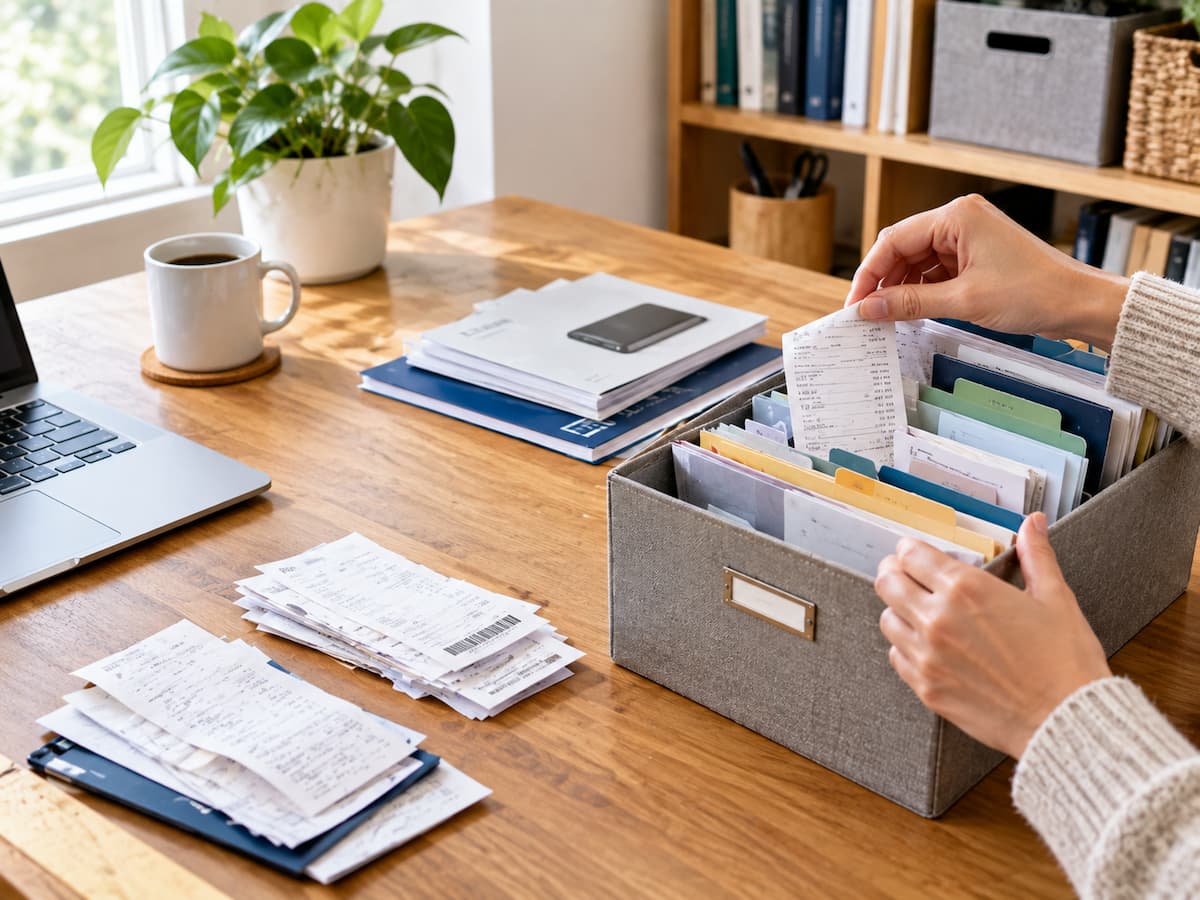
When working properly, receipts, warranty cards, instruction manuals, and purchase records are simple to ignore. They are commonly found in a kitchen drawer, desk pile, old envelope, or folder that has not been opened in years. They are rarely considered when an appliance is working properly or under warranty. When anything breaks, needs to be returned, or requires a specialised part or maintenance, things change quickly. A modest, inconsequential paper becomes crucial. Not often do people lose these documents. Too many people keep them. Real problem: they are stored without a defined system, making useful information difficult to obtain. It’s better to organise receipts, warranties, and instructions by job. Some show when and where something was bought, others explain protection, and others help you use or maintain it. A functional storage system is easy to create after mentally separating those purposes.
Start with Product, Not Document
Regular filing involves sorting documents by kind. Warranty, manual, and receipt files are separated. That layout makes sense until you need one item’s information. If the washing machine breaks, you may require its purchase date, receipt, warranty information, model number, and repair instructions. When spread across multiple files, these fragments require additional searching. Keeping product information relevant is often better. One folder or digital record can hold the washing machine’s receipt, warranty, manual, model details, and service documentation. Televisions, laptops, kitchen appliances, tools, heating equipment, and other pricey household items follow the same rule. You don’t need a folder for every cheap home item. Products that are expensive, sophisticated, covered by warranties, or require maintenance benefit most from the idea. Organising by item rather than by paper makes it easier to understand the information when you need it.
Not all Receipts Need Permanent Storage
Keeping receipts forever can cause filing issues. Grocery receipts, routine purchases, minor household items, and everyday transactions don’t need as much attention as significant appliances or expensive electronics. The useful question is not whether a receipt exists. Whether the receipt is still useful. Purchase records may be needed for returns, warranties, insurance, reimbursement, tax records, or ownership. Keeping the paper indefinitely adds clutter after the appropriate period has passed. However, discarding away vital purchase records because they look outdated can cause difficulties. Thus, a rational system prioritises long-term purchases or support needs. Consider what the receipt indicates and how long it will be helpful instead of considering all receipts similarly. This simple modification can drastically reduce household paper storage without encouraging irresponsible disposal.
Warranties Need Different Care
A warranty goes beyond a drawer document. A producer, retailer, or service provider may have product obligations during it. That makes dates and circumstances more significant than warranty card appearance. It makes the product name, model number, purchase date, and warranty duration easier to recognise when saving warranty information. Recording online registration information can also be useful. Digital warranties need the same care as printed ones. An email confirmation in an inbox may be difficult to find years later, especially if you forget the company or message. Keeping warranty information in a specified digital location simplifies future searches. The purpose is not to create a huge legal document archive. Simply put, it ensures that when a product fails unexpectedly, you can promptly answer the essential questions: what did I buy, when, and what coverage applies?
Manuals Should Be Available for Instructions
Manuals are generally maintained since they came with the product, but their utility varies. Some have hard-to-locate installation instructions, maintenance schedules, safety information, troubleshooting methods, or specifications. Others describe simple controls you may never use after a few days. Keeping every manual on paper might soon fill up a lot of space. When the manufacturer provides a downloaded manual, many products are easier to search and access digitally. A well-named PDF is easier to find than dozens of volumes in a packed cabinet. However, not all paper manuals should be recycled. Researching older technology online can be tricky, and some specialised items may contain valuable information. Better question: Does the handbook contain information that would be difficult to recover? If so, store it safely or make a digital copy. If the material is readily available from a trusted source and the booklet is taking up unneeded space, it may be unnecessary to preserve.
Store Important Family Records One Place
The best home filing system starts with one predictable place. It could be a cabinet, drawer, box, binder, or another specialised space. Habit, not container, matters most. The vital papers from new equipment should go where they belong, not wherever there is space. Other household members can also easily identify records with a single base. The system need not be sophisticated. Many homes only need broad areas for household products, key purchases, warranties, and property paperwork. The collection can be divided if it grows. Creating a comprehensive filing structure makes storing one receipt a project. A good household record system is easy to use right away. If finding the right place requires multiple options, people may leave documents on a counter or in a random drawer. Consistency trumps sophistication.
Digital Copies Reduce Clutter
Paper records are no longer necessary for many home records. Warranty information may arrive by email, while receipts may be retained digitally. PDF manuals are common. Digital records speed up searching, but they should not be used for reckless accumulation. A folder with hundreds of “receipt”, “manual”, and “warranty” files is like an untidy paper drawer. Digital recordings benefit from clear filenames. For critical files, backup is recommended. “2026-Dishwasher-Receipt.pdf” informs you more than “scan003.pdf”. Records that are difficult to replace should not be stored just on a phone, computer, or cloud account. Clear file names, consistent storage, and proper backups improve digital organisation. The goal is not to digitise every piece of household paper. This makes vital data easier to find and reduces the need for physical storage.
Photos Serve More Than Memories
Simple photos can preserve information that would be annoying to restore. Photographing the model number, serial number, labels, or crucial connections while buying an appliance, electronics, tool, or equipment can be valuable later. This technique is useful when the actual label is hard to reach. A photo can show the product’s exact configuration to supplement a digital receipt or documentation. This does not require a massive photo archive of every house item. Choosing information for troubleshooting, repairs, replacement parts, insurance conversations, or warranty communication adds value. Some well-labelled photos can save more time than old documentation. These images are more valuable when preserved with the digital records rather than amid thousands of unrelated photos. Simple: maintain hard-to-remember, hard-to-access, or hard-to-recreate information.
Space for Old Products Should Be Limited
Household records often outlast the things they describe. Manuals and receipts stay in the filing cabinet after people relocate, change appliances, upgrade devices, and sell or dispose of away equipment. Over several years, these records can generate a lot of obsolete paperwork. Periodic review prevents accumulation. When a product is sold, discarded, replaced, or permanently removed from the home, its paperwork should be reviewed. Some records may need to stay, especially in financial, tax, ownership, or warranty cases. Others may no longer be useful. The record should guide the decision, not the emotional toll of tossing something away. Keeping a manual for a discontinued appliance does not improve organisation. It simply means the filing system no longer reflects reality. When records change with the home, organisation improves.
Show Important Information
A filing system can fail even when you store all documents properly. The difficulty may be that a folder contains the necessary information. A warranty expires after several years, and you may forget the date. You may not want to browse an entire manual for an appliance’s model number to find a filter or replacement part. A basic note of the product name, model number, purchase date, retailer, and warranty information can simplify future duties for critical household products. This information could be stored in a digital household record or with traditional documents. Not every document should be duplicated. It’s to provide a quick reference for important details. A few minutes spent collecting this information when you buy anything can save you a lot of time later, especially if you forget where the packing or documentation went.
A Bad Day Filing System Should Work
The best test for household organisation is not how tidy it looks. Whether it works after a failure. Imagine a busy evening when an expensive gadget breaks down. You would rather not remember which drawer houses warranties, receipts, and instructions. One obvious place to start looking for the information is here. That’s why convenience should be part of organisation, not optional. A good system reduces pressure-induced decisions. It organises key documents, deletes useless ones, and makes digital versions searchable. The system should also be adaptable to new purchases without requiring a total overhaul every few months. Adding a new product in under a minute increases the likelihood of sticking with it.
Best System Is One You Will Maintain
Every home has various items, documents, and routines; thus, there is no perfect filing system. Some prefer a physical binder, while others maintain everything digitally. Product-specific records may benefit a home with multiple appliances, while another may just need one compact file for essential purchases. Clearly connecting the product to its supporting information is key. Purchase receipts, warranties, and manuals should be easy to find. Everything else can be treated more gently. Document organisation is not for its own sake. To simplify ownership. The system works when a receipt certifies a purchase, a warranty confirms coverage, or a manual solves an issue. Documents that sit in a drawer for years are just taking up room.
Small Changes Improve the Whole System
You don’t need to empty every cabinet and reorganise all your household files in a single afternoon. Start with records related to your possessions and interests. Gather your most important receipts, warranty information, manuals, and product data. Keep records that have a financial or legal function and delete those that relate to deceased goods. Give the leftover data a predictable home. The result need not be pretty, sophisticated, or well-categorised. It must be clear. When you know where to get the information behind a significant household purchase, a tiny pile of documents becomes a reference system rather than clutter. The true goal is less searching when it matters, not more filing.
Conclusion
Receipts, warranties, and instructions are valuable when you don’t want to have to search for them. Despite having all the relevant documents, a packed drawer with random papers is useless. Better systems link records to goods, keep important information together, delete outdated papers where necessary, and employ digital storage where it makes access easier. Creating a perfect archive of all your purchases is not the aim. Build a simple reference system to address practical problems when they arise. Information for repairing an appliance, returning a product, or explaining a new setting should be easily accessible. Friction reduction is the goal of good household organisation. Give these records a clean home, and they will be able to work again.
FAQs
1. Should warranty receipts be kept?
For major purchases, having the receipt and warranty information together is convenient because a warranty claim may require both. For everyday purchases, long-term storage may not be needed beyond the return, warranty, or other period.
2. Should manuals be stored digitally?
For many goods, a digital handbook is easier to locate and takes up less room. However, specialised equipment or older items may warrant keeping the original handbook when new copies are scarce.
3. Keep household receipts for how long?
Not every receipt has the same period. Records should be kept for returns, warranties, reimbursements, taxes, insurance, ownership, and other valid purposes. Purchase type and local laws can also affect requirements.
4. Where are store household warranties?
Choose a reliable, accessible site. Important warranty information might be stored physically, digitally, or both. The key is connecting the warranty to the product and instantly identifying the purchase date and coverage.