
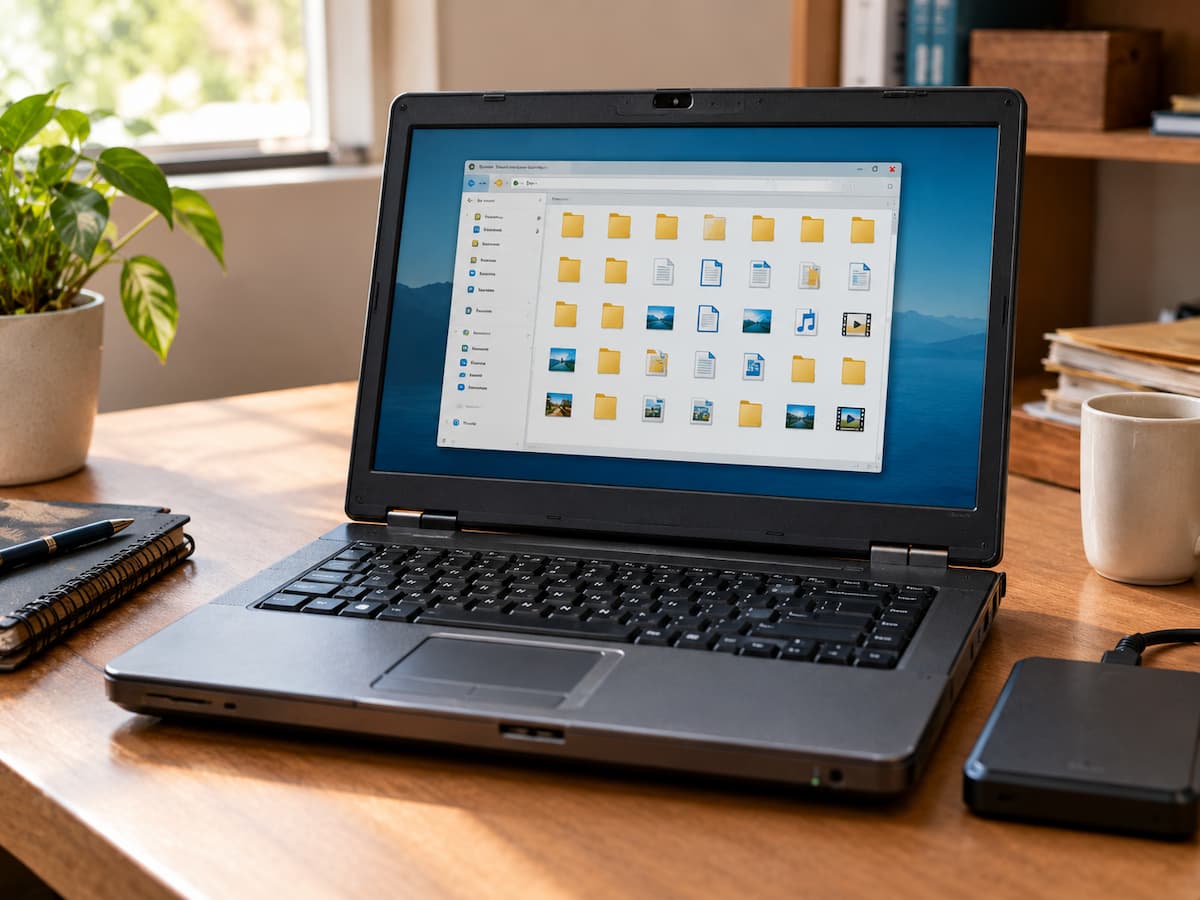
An old computer could look like a piece of antiquated technology in the corner, but its storage drive could have a remarkably rich history of the life it was used for. Even years after a laptop or desktop is replaced, there can remain images, school assignments, work documents, saved browser files, downloaded receipts, unfinished projects, music collections, installation files and folders that haven’t been opened in years. Some of these files are useless, while others may be difficult or impossible to replace. The difficulty is that folks remember the computer, not what was stored inside it. The upshot is that a machine that hasn’t been turned on in a long time can become a forgotten source of both essential information and needless digital clutter. Before you recycle, sell, donate or simply throw away an old computer, it’s worth thinking about what you could still have on it. Even if you plan to wipe the system later, it’s worth checking what’s on it first, in case you lose valuable files along with the hardware.
An Old Computer Is Often a Time Capsule
Files often outlive the machines that they were produced on. A computer may be replaced because it is slow, it no longer receives software updates, or it no longer fits the demands of its owner. That doesn’t mean the information it recorded went out of date at the same moment. Perhaps you have an old laptop with photos from when you were not using a newer phone for everything. Years of documents written for school, jobs, hobbies, or personal projects could be stored on a desktop computer. Some may even be files that were produced, then forgotten, and never copied to a newer machine. That’s what separates an old PC from a regular storage box. Its contents often reflect how the gadget was used at a given moment. Scrolling through it can disclose information that is not available on newer devices any more. The hardware may have little practical utility now, but the data stored on it can still be important.
It’s Easy to Skip Personal Photos
Most likely, the surviving photos are still lying around on outdated computers, unknown. Back in the days before smartphones and cloud photo libraries became the norm for everyday shooting, many individuals would download photos from their cameras or phones onto their computers and seldom interact with the original files again. Maybe those folders contain photos that didn’t transfer to a newer device. They can be family gatherings, holidays, long friendships, personal endeavours or even banal occurrences that only gained importance with time. Photos are also frequently scattered. Some folders might include neatly organised albums, while others contain photographs downloaded from a camera, email attachments or temporary exports. Some have a name that is only a number assigned by a camera. That’s why simply searching for folders with obvious names like “Photos” may not be enough. Old drives can have image files practically anywhere. If the computer is still working, a diligent look through popular image formats and directories where photos are kept can discover material you may have effectively forgotten about.
Old Books Might Be Worth More Than They Appear
You can easily miss documents, as they normally take up a lot less room than photos or videos. Only a few megabytes of files can hold years of vital knowledge. An outdated computer can have school assignments, resumes, project notes, invoices, manuals, spreadsheets, letters, or other records. Some may not be relevant any longer; some may be valuable for reference. Finding these files can be challenging with file names. A document saved years ago as “final.docx” or “notes.pdf” gives you no clue as to what’s within. An old project folder may also contain different versions of the same document, with no way to tell which one is the real final one. So when you look at an old computer, evaluate the papers for their content and context, not their name. A single small file can be worth significantly more than a vast collection of temporary downloads.
The Desktop Can Tell You What Mattered
The ancient computer’s desktop is worth a look, as users would often use it as a temporary workstation. Files stored there could contain things that were once considered vital but never made it into a dedicated foSuch behaviour. This can lead to an odd collection of shortcuts, documents, photos, folders and half-done tasks. Some files might have stayed there for years because no one ever had a need for them again. The desktop can also give clues to the history of the machine. The folder names may trigger memories of earlier projects or events, which can help you make sense of other items saved elsewhere on the system. But don’t think that anything on the desktop is disposable. Just because a file was casually put somewhere does not indicate it was inconsequential. An old desktop might be dirty and still have information worth saving.
Download Can Show Years of Digital Activity
The Downloads folder demands special attention, as it is often a place where things have never been well organised. Older PCs can build up downloaded PDFs, photos, software installers, forms, papers, compressed archives and attachments. You obviously do not need some of these files. Some others may be difficult to identify because you have forgotten their original purpose. Installation packages are typical instances. When you have an outdated computer, it can have installers on it for programs that are no longer installed or no longer supported. Occasionally these can be eliminated when it becomes evident they are not required. But those installers have personal documents among them that need a particular amount of scrutiny. Downloads may also contain duplicate copies of files that are later organised elsewhere. It’s about comparing places to see if a document is actually redundant. That folder is worth going back to, exactly because it was likely never meant to be long-term storage.
Old Email Attachments Might Still Exist
Most likely cloud services are tied to email accounts, but if it’s an older PC, there may be locally saved email attachments or exported messages. Someone may have downloaded a document from an email years ago and never transferred it. Attachments can be receipts, photos, project documents, forms and other information. They can be difficult to find because the filename is generally the one given by the original sender. If you used an ancient email application on the computer, the local data may also contain information that is not apparent from conventional folders. Messages may have been stored in application-specific forms, depending on the program and setup. That’s not to say that every old e-mail file needs to be recovered. That only means that key information might not always be a regular PDF, image or document. I’d also think about whether there was any email data on the old machine that was kept locally and that you still care about.
Browser Data Can Tell You the Origin of Other Files
The old browser profile contains bookmarks, saved pages, downloads and other information that can help to clarify what the machine was used for. Some browsers also keep a local history; however, the actual data depends on the browser, its settings and version. Bookmarks can be especially valuable because they often point to websites or online resources that you may not recall years later. A saved bookmark could find an old project, service, account, or source of information. At the same time browser data can contain private information. So you don’t want to pass on an old computer carelessly to someone else with the original user profile remaining on it. If the machine is being readied for disposal or transfer, privacy should receive special consideration that goes beyond routine file management. Finding the data is simply one part of responsibly managing old computers.
Old Project Folders Can Contain Multiple Generations of Work
Creative and professional initiatives often leave behind large swaths of files. An ancient computer might have a few versions of presentations, photos, movies, drawings, spreadsheets, writing projects, or other work. It can be difficult to wipe up these folders because there can be real value in having numerous versions. A file named “final” isn’t necessarily the final version, and a subsequent file may have been generated for some other purpose. It’s best to comprehend the project first, rather than removing files based just on their names. Open representative files as needed to assess which are full, which are duplicates and which include unique information. Completed projects may potentially have supporting material that is no longer needed. By separating out the finished work from temporary working files, you reduce the amount of storage required but keep the bits that are important. Older project folders typically show why you should do digital cleansing with judgement rather than age alone.
External Drives and USB Devices
An old computer may have had files copied to external discs, USB devices or newer PCs at different times. Old hard drives can make it tempting to think anything on them is already backed up. That assumption has to be verified. A file that is present on another device is not always complete, current or accessible. The external drive can be damaged, missing, or an earlier version. Maybe the newer computer only got a few of the folders and not the whole collection. Check the known copies against any important files you may find on an old computer before removing the old copies. This principle is especially true with personal photos and artistic work, where there can be several variants with no clear master copy.
Don’t Just Open Files to See What They Are
Curiosity can be helpful in a digital cleansing, but it needs to have limitations. Do not open an unusual file automatically out of curiosity to see what it contains. This is especially true for files that can run software. Old computers might have old installers, scripts, or executables that you no longer trust or care about. If you are unfamiliar with a file, look at its name, location, type, date, and probable source. If you must, investigate it with suitable security tools or some other secure means and not by executing it. An old file isn’t inevitably harmful, but you should be more wary of an unknown executable than you would be of a regular photo or text file. The safest cleanup safeguards the information and the computer you are using to evaluate it.
Old Computers May Contain Duplicate Versions
After years of using a computer, you will have many copies of the same file. The document may have been copied to a USB drive, sent to someone, saved to another place, and then downloaded again. Having duplicate files isn’t always a bad thing. They could be distinct versions or backups. The question is, of course, whether each duplicate serves a different purpose. If two files are truly similar and one has been stored in a safe place, then the duplicate may not be needed. But if they contain different things, then eliminating one of them because of similar names may lose information. Comparison of files can thus be more useful than comparison of filenames. This is especially true for paperwork, spreadsheets and creative work where changes can be modest but essential.
What if the Computer Does Not Start?
If the computer won’t boot up anymore, that’s a different situation. If you have critical data stored on its drive, continually trying random repairs isn’t usually the best option. The first step is to determine whether the storage device is still accessible and whether the data is to be recovered. Depending on the hardware and the health of the drive, recovery can be anything from just plugging in and accessing the disc to expert data-recovery procedures. If you have irreplaceable information, don’t experiment too much with the drive. If the hardware is already showing signs of physical failure, then continued usage of the storage device can make recovery more difficult. The main idea is simple: a computer which does not start is not necessarily a machine whose data has disappeared.
Before Recycling or Donating an Old Computer
Consider it before you decide to get rid of obsolete computer files. Copying vital files is one thing, but privacy is a factor too. “Older computers might hold personal papers, photos, browser data, saved accounts, application data and other information that you wouldn’t want the next user to see. But just deleting a few folders isn’t necessarily the same as securely eliminating personal information. The right technique will depend on the operating system, storage technology and the target destination for the machine. If you sell, donate or recycle the computer, use the factory reset or data-erasure procedure advised by the manufacturer or operating system. If the device holds extremely sensitive information, seek professional assistance when necessary. You should take data disposal as seriously as data storage.
The Best Time to Review an Old Computer
It’s tougher to manage with an ageing computer when its situation only keeps getting worse. Batteries become dead, storage devices age, accessories get lost, and users forget passwords or configuration details on the machine. But that doesn’t imply you have to leave an outdated computer powered up every few months forever. It simply indicates that indefinite postponement of the decision can raise uncertainty. If the machine remains available, what role does it have today? It might have anything worth moving, something worth archiving, or it might have nothing worth keeping. Once you take that option, you can deal with the hardware accordingly. The key is not to leave an old computer lying around forever, with no one knowing what’s in it or what to do with the data.
A Forgotten File Can Be More Valuable Than a New Device
Modern electronics make the simple assumption that everything vital has automatically followed us along. Sometimes it has. Occasionally it hasn’t. An old computer can have a photograph that was never posted, a document that was never duplicated, or a project that exists nowhere else. But their age doesn’t make them worthless even if they’re buried behind years of digital trash. Which is why analysing an old computer isn’t about cleansing storage; it’s about restoring context. You decide what is worth bringing to the present and what can be left behind. And the computer itself may be ripe for recycling. Its contents might not be.
Conclusion
It is easy to underestimate old machines. When a new laptop or desktop arrives, the old computer is typically neglected, considering that its storage could store years of images, documents, projects, downloads and other information. Before you throw away or delete an old computer, make sure to see what is on it. Look beyond obvious folders. Pay attention to images and papers. Investigate old project files thoroughly and do not assume that a copy exists elsewhere without checking. If the computer is eventually going to another individual or to a recycling centre, then privacy merits equal concern. Both are important: keeping the relevant information and correctly deleting the personal data. An ancient computer may not be useful for its original purpose. That doesn’t mean that everything in it suddenly becomes useless.