
When you create a document, a filename rarely seems relevant. You know why you saved it, what you’re working on and what the file is about. Six months later, you may have lost that same knowledge. A file called final.pdf could have seemed perfectly evident at the time, but when you have twenty additional files with similar names, it becomes nearly meaningless. That’s why filenames become more important as digital collections grow older. They are little reminders of what a file is, when it belongs and why it may be valuable. A filename does not need to explain everything in a document. It just needs to have enough information for your future self to work out what it is without having to go through a load of files first. This is great for financial records, job paperwork, receipts, photos, applications, research material and personal records that can lay unused for months or years. The finest naming habits are not about making files appear professional. It’s about leaving useful clues for a version of yourself who might not recall making the file.
The Problem With Names That Only Make Sense Now
Some of the most annoying filenames are not visibly bad when initially constructed. Words like new, updated, latest, important, final, etc. seem useful, as they characterise the file from the present perspective. The problem is, these words are losing their significance. Eventually, a file called latest-budget.xlsx becomes one of numerous “latest” budgets. A file called final-contract.pdf becomes confused when there is a subsequent amendment. The filename has retained temporary information instead of permanent information. A better name is one that is not likely to become unclear. The subject, project, date, customer, organisation or document type will typically be meaningful long after the file was created. This is one of the easiest digital organising enhancements you can make, as it does not require any extra software. You are replacing transient language with information that has a longer shelf life.
Think About the Question You Will Ask Later
The best filename is the answer to a question you will ask in the future. Imagine that you are looking for the document a year later. What words would you usually type into the search box? Perhaps you remember the name of the company. Maybe you’ll remember the project, the year, the type of document, or the person. These are the words to consider when naming the file. A useful file name provides you more than one way back to it. For example, insurance. A PDF file is hard to differentiate from dozens of other insurance documents. 2026-Home-Insurance-Renewal.pdf gives you multiple clues all at once. You can search for “2026”, “home”, “insurance” or “renewal”. You do not need to recall the precise file name. It is built to work with imperfect memory, which is just what you need in a long-term file system.
Dates Are More Useful Than They Appear
Dates are powerful, as they give you information that rarely becomes stale. A document produced in March may be important years later, and the date of creation can immediately distinguish it from other similar documents. If you use a consistent date format, files also sort naturally. Something like 2026-03-18 is typically easier to sort chronologically than names that use inconsistent formats, such as March 18 2026, 18-03-26, and 03-18-2026. More important than the format is that you are consistent. Dates are especially useful for bills, receipts, contracts, statements, applications, reports, photos, project files, and records that will probably have more than one version. Not every file needs a date in its name. Dates in informal papers may be unneeded clutter. The idea is to use dates when they really help you identify or compare files. If you go back to an old folder years later, a consistent date can provide you context that your memory no longer provides.
Position the Most Useful Words Where Search Can See Them
No need to write as if file names were formal sentences. Short, descriptive combinations of words are better. The key information should be available without opening the document. See document.pdf and 2026-Car-Insurance-Policy.pdf. The second filename contains words that can be searched separately. This is important since digital search doesn’t know what you remember. It just understands what information is in the files and the metadata around them. Meaningful filenames consequently make searching more forgiving. You may remember that you were looking for anything to do with your car, rather than remembering it was named a policy document. “Still, a search for “car” gets you closer to the proper file. This is particularly helpful if you have thousands of documents and no realistic way to go through every folder manually.
Don’t Make File Names Mini Essays
Useful doesn’t mean super long. A filename with every conceivable detail can be hard to read and may make it harder to find vital information. A document named something like 2026-04-12-Home-Insurance-Renewal-Policy-Updated-After-Email-From-Agent.pdf may have a lot of information in it, but a lot of it probably doesn’t need to be there. A shorter name might be enough, such as 2026-Home-Insurance-Renewal.pdf. You want to add information that will help identify the file among other comparable files. Extra information must earn its position. If a detail will not help you find or search for the document later, it probably should not be in the filename. A decent filename is easily readable at a glance. Sometimes apps truncate long names graphically, which makes the useful information difficult to see.
Show Similar Files As Similar
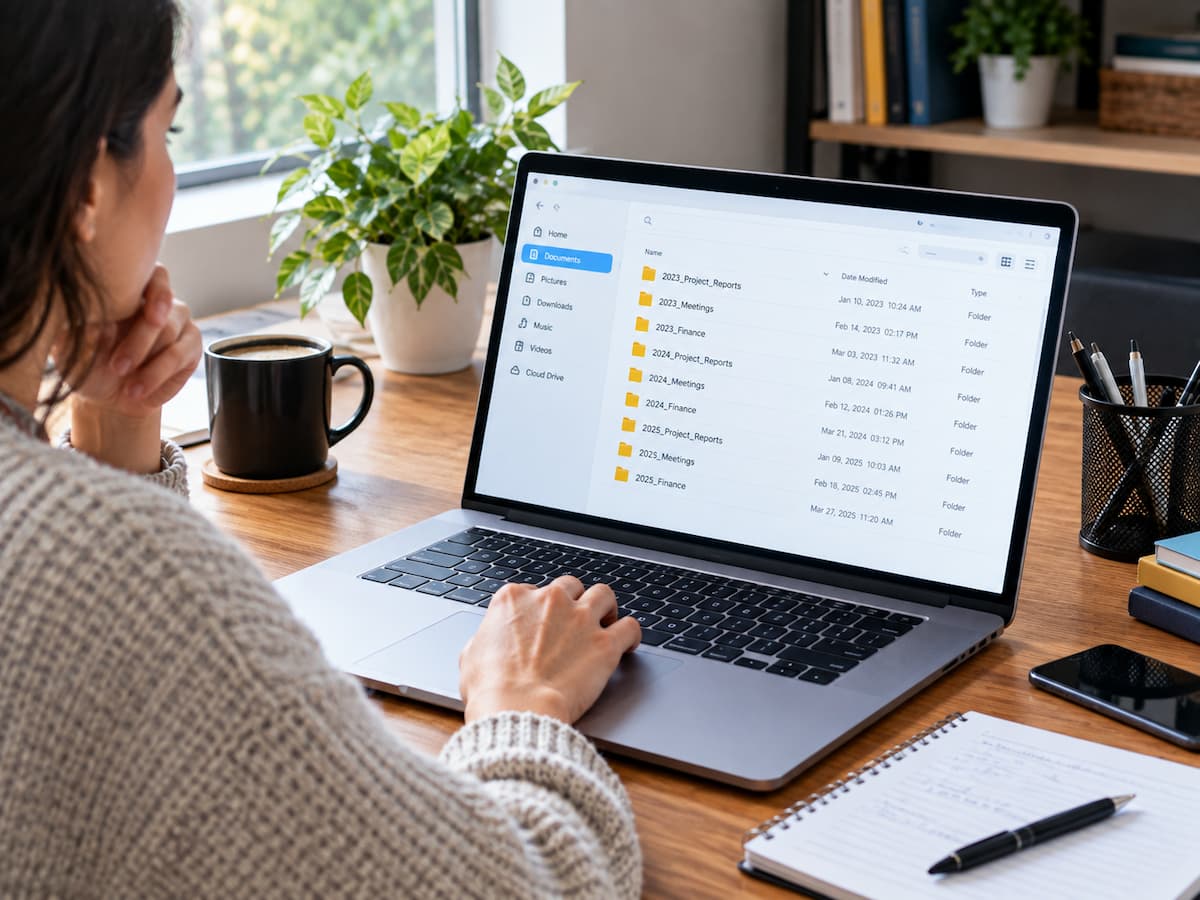
This consistency can be handy if you have many files in the same group. Imagine a set of project documents where one file is Website Proposal, another is client_project_final, and another is Proposal March. Even if the documents are related, the multiple naming conventions make the collection feel disjointed. A common pattern can make it much easier to scan collections of files. For example, project files might start with the project name, followed by the document type and date if appropriate. The formula itself doesn’t matter. It doesn’t matter what it is, just that connected files share something. It is easy to grasp folders and analyse search results. Consistency also saves mental effort in generating new files, since you don’t have to design a new naming style each time. A minor naming practice repeated across hundreds of pages can become one of the most useful kinds of digital organisation.
Version Numbers Trump ‘Final’ and ‘Final Final’
Few sets of filenames are more likely to cause confusion than multiple copies of the same document. A document could start as proposal.docx, then proposal-final.docx, then proposal-final2.docx, and finally proposal-final-revised.docx. This is because the term “final” refers to a decision that can change. If you really need to keep various versions, a consistent version number is clearer. Proposal-v01, Proposal-v02, and Proposal-v03 provide the sequence instantly, without stating that one version is forever final. Dates can also help when the timeliness of updates is important. What matters is that you differentiate between versions using information that still makes sense afterward. If there must be only one current copy, it may not be necessary to keep each intermediate version. But if you do need to keep the modifications, labelling them correctly will save a lot of confusion. It is not intended to develop a complex version control system for common documents. It’s just to prevent filenames from becoming the history of ever more frantic attempts to identify the latest file.
Folder Location Shouldn’t Factor Too Much in Names
A file name that looks sensible in one location can be perplexing if the file is moved, copied, attached to an email or accessed from search results. For example, January Statement.pdf may be clear in a folder called Bank Statements, but much less so if it appears in search results that include files from other organisations. This provides a bit of background to make the file more portable. For more details, see 2026-January-Bank-Statement.pdf wherever it appears. That doesn’t mean that every filename has to include the whole path it lives in. That just means the filename should be distinctive enough to survive outside its original location. Digital files are usually copied, exchanged, synchronised, backed up and reorganised. A sensible file name is one that makes sense even if the folder around it changes.
Do Not Use Abbreviations You Will Forget
Abbreviations save space, but they might also create another memory problem. When you construct a file name like HIS-INS-RNW-26.pdf, it may seem efficient, especially if you use those abbreviations every day. Years later, you may not remember whether HIS stands for history, household, or something else. Plain words usually last longer than personal shorthand. There are cases where abbreviations are completely acceptable, as in a professional setting where everyone knows them. But for personal archives and long-term documents, plain language is usually safer. You are not naming the filename of the person you are today. It is written for anybody who needs to understand this file at a later time. This includes a future you who may have forgotten the terms that you employed once.
Special Characters and Inconsistent Formats Can Cause Friction
Complex file names might cause unnecessary issues, as different operating systems and programs treat file names differently. Modern systems usually let you work with spaces rather well, but you still have to be consistent about naming, especially if you move files from device to device or use software that treats filenames differently. Long collection names, odd symbols, punctuation that is repeated, or irregular capitalisation can make it tougher to scan a collection. It usually suffices to take a simple strategy. Use normal words, be consistent in your structure, and don’t use ornamental characters just to make a filename look different. The aim is for clarity, not style. A filename is an element of the information system, not a title to be adorned with visual embellishments.
The Naming Rule Should Correspond to the File Type
But not every kind of document needs the same naming technique. A financial record may need to have a date, institution, and type of document. Project name, version and format may be more useful for a creative project. A photo might be easier to identify by incident, place, or date. A household manual may require a product name and model number. Attempting to compel all files into one universal naming convention can make the system excessively cumbersome. Instead, build a few simple patterns for the kind of files you create often. The patterns should be predictable, but not inflexible. You want just enough consistency to make files easy to scan, while allowing the information to reflect what really matters in each category. A clear structure allows for context.
Old Files Can Be Renamed With Time
Learning the benefits of improved filenames can be a fresh temptation to rename your whole digital collection. That is not needed often. When you have a folder with hundreds or thousands of old files, it can take ages when each filename becomes a project in itself. It’s more sustainable to rename critical files when you first find them. If you’re trying to find an old tax document, once you find it, please rename the file to something more meaningful. If you open an old project folder for a new reason, please tidy up the names that matter. New files should adopt the better naming technique from the start. This slowly enhances your digital archive’s quality without making organisation a full-time job. It’s not about having your past put together nicely. It is to make your future searches easier and easier.
A Filename Should Tell You Enough Before You Open the File
One of the best tests for a filename is surprisingly simple: can you tell what the file probably contains before opening it? If the response is yes, the name is accomplishing its job. If you find yourself double-clicking on several files to find the one with the information you need, then the file names are not providing you enough context. This is especially critical for documents that are indistinguishable in search results. A detailed filename saves you from wasteful opening, closing, and comparing. It’s especially handy if files are in a long folder where only part of the material is shown immediately. You shouldn’t have to remember how to interpret all items. The filename should bear some of the responsibility.
Best Naming System is One You Can Repeat Without Thinking
A naming rule has value only if it endures in normal life. If it takes thirty seconds to decide exactly how every filename should be written, the system will probably be abandoned. Good rules are basic enough to be automatic. You create a document, assign it a meaningful subject, add a date or version when useful, and save it. There is no need to discuss capitalisation, punctuation or the philosophical category of the work each time. The less mental energy it takes, the more probable the habit will stick. So a simple naming system that you always follow is more useful than a flawless system that you use just when you have lots of time. Repetition is the source of organisation, not a massive one-time cleanup.
Good Names Breathe New Life into Old Documents
“Just because you’ve forgotten an old file doesn’t mean it’s of no use. Sometimes a document regains value when a scenario it relates to reappears. An old quote can assist you in comparing a new buy. An old contract can be an answer to a query. Background information from a previous report can be helpful. And sometimes a receipt suddenly matters, as when you need help for a product. Now you see why good filenames are worth their weight in gold. They let you access information that has been lying fallow for months or years without having to remember exactly where or when you saved it. Naming files is not simply about organisation in that respect. It is a means for keeping knowledge useful throughout time.
Make Your Future Self Guess Fewer
The most fundamental reason to enhance filenames is that your future self will not remember everything your present self knows. You’ll forget the purpose of a document, which version mattered, what some cryptic shorthand stood for, or which project a generic file belonged to. That’s normal. A computerised filing system should take such into consideration, rather than counting on faultless recall. Meaningful terms, helpful dates, clear versions, and consistent patterns are the subtle signals that survive the passage of time. You don’t need a sophisticated naming scheme. You need names that still make sense even if the original context is gone. Treating filenames as information, rather than just labels, makes it much easier to search, compare and analyse old documents.
Conclusion
When a document is new, you still recall all around it; thus, a filename is easy to disregard. Time alters all that. The project is over. The folder is forgotten. The reason you created the document falls out of your immediate memory. What is left is the filename. If there’s something helpful in that name, it can get you back to the document fast. If it just says “final” or “document” or “new version”, it makes the search a whole lot harder. So the best naming habits are simple: use meaningful terms, include dates when they are relevant, identify versions explicitly, avoid temporary labels, and give linked files a consistent pattern. You don’t have to rename your entire digital life overnight. Begin with the key documents and let the better names happen for everything else that comes along. Those little choices add up over time to a digital archive that is far more searchable, even if the files are old and your recollection of them is not what it once was.
FAQs
1. What should a good filename include?
Useful filenames often contain information to assist in differentiating a file from similar documents. Depending on the file, this could be a subject, project, date, person, organisation, document type or version.
2. When to place the date at the beginning of a file name?
When chronological ordering is important, it can be good to begin by providing the date. Utilising a format like 2026-09-09 keeps dates consistent and allows files to sort organically. But there are several kinds of files that do not require dates.
3. Is it undesirable to have ‘final’ in a filename?
It can be confusing when there are several revisions. Words like “final”, “latest” and “new” can lose their meaning with time. Where numerous copies are to be kept, version numbers or dates tend to be more reliable.
4. Do I need to rename old files?
You don’t need to rename everything. Better to rename critical files when you find them and apply better naming standards for new files. This improves the collection bit by bit without another big organisational project.
5. What is the maximum length of a filename?
Long enough to tell what the file is without opening it, but not so long that the crucial data is hard to see. Include the information that really assists in distinguishing the paper and omit the unneeded context.