
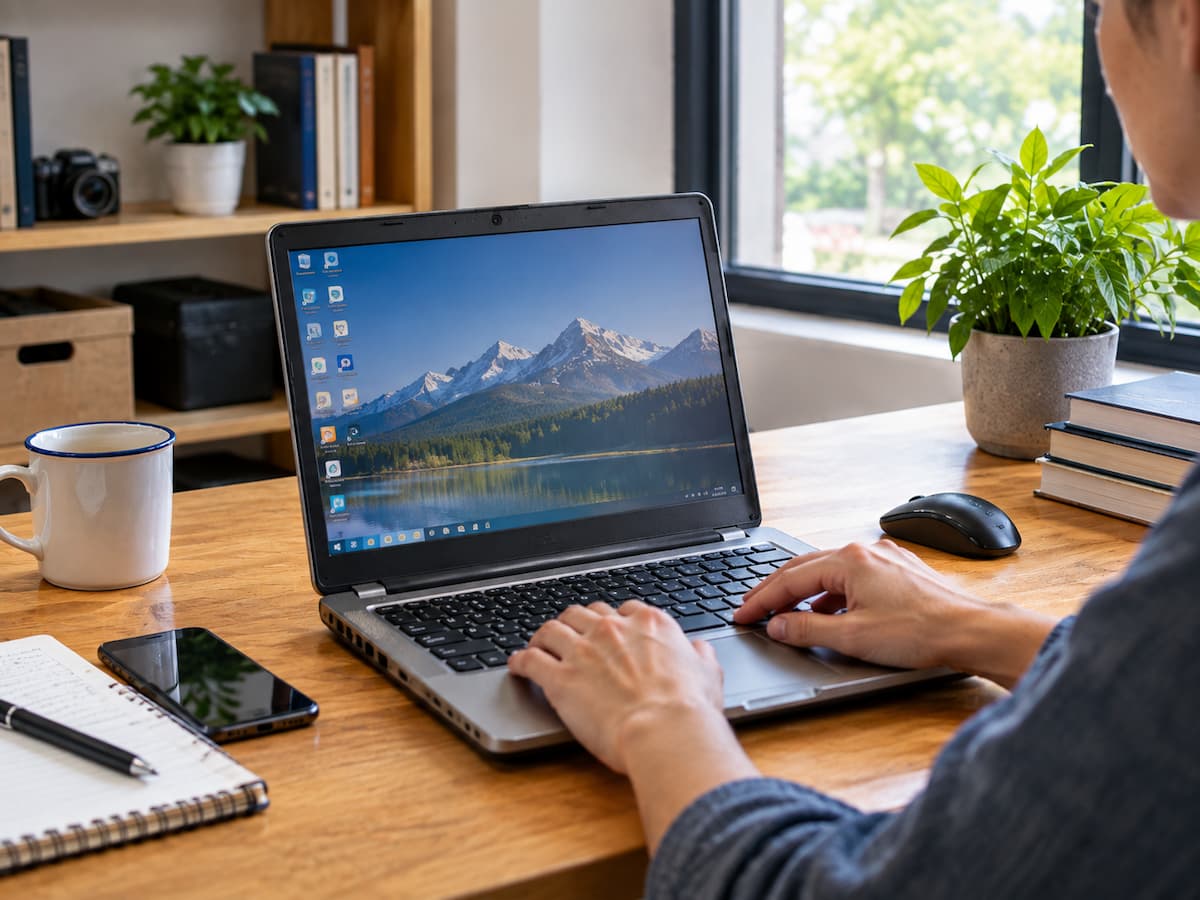
An old computer is easy to dismiss. It may take longer to start, lack some newer features, or look outdated beside the latest models. Once a device reaches a certain age, the usual advice is often simple: replace it. That advice can be reasonable, but it is not always good advice.
A computer does not become useless simply because newer hardware exists. If it still handles the tasks you actually perform, replacing it may solve a problem you do not really have. In some cases, an older machine can remain useful for years with little more than sensible maintenance, a storage upgrade, or a fresh software setup. The better question is not “How old is this computer?” It is “Is this computer still doing its job well enough for me?”
Age Is Only One Part of the Decision
A computer’s age provides useful context, but it does not tell you whether keeping it is a smart choice. Two computers that are eight years old can have completely different practical value. One might have been heavily used every day, developed several hardware problems, and struggled with modern software. The other might have been used occasionally and still perform basic tasks without much trouble.
Consider these factors together:
- Performance: Does it run your normal applications comfortably?
- Reliability: Does it work consistently without random crashes or shutdowns?
- Storage: Is there enough usable space?
- Battery: For laptops, does the battery still provide acceptable runtime?
- Software support: Can it still receive the updates your important applications require?
- Physical condition: Are the screen, keyboard, ports, hinges, and other components in reasonable shape?
- Repair cost: Would fixing it cost much less than replacing it?
- Your workload: Are your computing needs still similar to when you bought it?
Age matters, but these questions usually matter more.
If It Still Handles Your Everyday Work, Keep It
The strongest reason to keep an old computer is surprisingly simple: it still works for what you need.
Someone who mainly checks email, writes documents, manages photos, browses the web, watches videos, and occasionally uses spreadsheets may not benefit greatly from a powerful new machine. A newer processor may be faster. More memory may improve multitasking. A newer display may look better. But if the old computer already completes those tasks without causing meaningful frustration, the additional performance may not justify the expense. This is particularly relevant when your computing needs have stayed stable. You do not need the newest hardware merely because it is available.
A Simple Test
Ask yourself:
What task do I regularly perform that my current computer cannot handle reasonably well?
If you cannot name one, replacement may not be urgent. That does not mean an old computer should be kept forever. It simply means there should be a practical reason to replace it rather than treating age as the reason by itself.
Older Computers Can Be Excellent for Basic Tasks
A computer does not need to be powerful to be useful. An older system can still have a practical role as a:
- Writing and document machine
- Family computer
- Secondary browsing device
- Media player
- Photo storage system
- Printer or scanner workstation
- Backup computer
- Learning machine
- Home office computer for light workloads
This can make keeping an older computer particularly sensible when you already own it and it has no major problems. For example, buying a new computer just to create documents on weekends may provide very little practical improvement compared with continuing to use a functioning older machine.
An Old Computer Becomes More Valuable When It Has a Specific Job
One useful way to think about ageing technology is to stop asking whether it can compete with modern computers. It does not need to compete. An older computer only needs to perform its assigned job. A ten-year-old desktop might be unsuitable for modern video production but perfectly adequate for storing documents or running a simple offline application. A laptop with an ageing battery might still be useful on a desk where it remains plugged into power. Giving an older computer a narrower role can extend its useful life without pretending that it performs like a new machine.
Example:
Imagine an older laptop that struggles when running multiple modern applications but works perfectly well for writing. Replacing it immediately might be unnecessary. Instead, it could become a dedicated writing computer. Removing unnecessary startup applications, freeing storage space, and keeping the software environment simple may make it considerably more pleasant to use.
A Small Upgrade Can Change the Calculation
Sometimes the computer itself is not the main problem. A slow storage drive, insufficient memory, or a worn battery can make an otherwise capable machine feel much older than it actually is. Before replacing the whole computer, identify what is creating the frustration.
| Problem | Possible improvement |
|---|---|
| Slow traditional hard drive | Consider replacing it with an SSD if compatible. |
| Too little memory | Check whether a RAM upgrade is supported. |
| Almost no free storage | Remove unnecessary files or expand storage. |
| Poor laptop battery life | Consider battery replacement if available and worthwhile. |
| Excessive software clutter | Clean up unnecessary programmes and startup items. |
| Slow startup | Review startup applications and storage health. |
| Overheating | Clean vents and check cooling condition. |
Not every old computer can be upgraded, and some modern laptops have limited upgrade options. The point is to diagnose the problem before spending money. A modest upgrade can sometimes delay a much larger purchase.
When Keeping It Saves More Than Money
The financial argument for keeping an old computer is obvious: you already own it. But the savings can go beyond the purchase price. Replacing a computer can involve accessories, software, setup time, data migration, account logins, configuration, backups, and learning where everything is on the new system.
If your current computer already has your files, applications, settings, printers, external drives, and familiar workflow configured, continuing to use it has a convenience value. That does not mean switching to a new computer is a poor choice. It simply means the real cost of replacement is sometimes larger than the advertised computer price.
There Is a Difference Between Old and Unreliable
This scenario is where keeping an old computer can stop making sense. A computer that is old but dependable may be useful. A computer that is old and increasingly unreliable is a different situation. Frequent crashes, failing storage, overheating, damaged charging ports, broken hinges, intermittent displays, or repeated hardware failures can turn a cheap old computer into a constant source of trouble.
Watch for a Pattern, Not One Incident
One repair does not necessarily mean the computer should be replaced. The bigger concern is a pattern of problems.
If you have recently repaired one component and another major component begins failing shortly afterward, the economics can change quickly. At some point, you are no longer maintaining a useful machine; you are repeatedly investing in an ageing collection of components. That is usually a stronger replacement signal than age alone.
Software Support Matters More Than People Expect
Hardware can remain functional long after software support becomes a concern. An old computer may still start and run normally while gradually becoming less suitable for modern computing because its operating system, browser, drivers, or applications are no longer adequately supported.
This matters especially for computers used for:
- Online banking
- Work accounts
- Sensitive documents
- Password management
- Business software
- Regular internet browsing
A machine that cannot maintain an appropriate software and security environment should not be kept simply because the hardware still works. For an offline or narrowly defined task, the situation may be different. For an everyday internet-connected computer, software support deserves serious attention.
The Computer Should Not Become a Daily Frustration
Saving money is useful. Being miserable every time you open the computer is a negative. There is a point where performance problems create enough wasted time to justify replacement. For example, if a task that should take five minutes repeatedly turns into fifteen minutes of waiting, freezing, restarting, or troubleshooting, the computer may be costing you more than its low ownership cost suggests. Think about friction.
Signs the Computer Is Creating Too Much Friction
You may want to reconsider keeping it if:
- Programs regularly stop responding.
- You constantly wait for basic tasks.
- The system struggles with your normal workload.
- Storage is continually full.
- Repairs have become frequent.
- Important software no longer works properly.
- You avoid certain tasks because the computer makes them difficult.
- You spend more time troubleshooting than using the machine.
A computer is a tool. If the tool repeatedly interferes with the work, replacement becomes easier to justify.
When Keeping an Old Computer Is Probably the Better Choice
Keeping it makes more sense when most of the following are true:
- It performs your normal tasks: you are not asking it to do work beyond its capabilities.
- It remains reliable: You can depend on it when you need it.
- It is reasonably secure and supported: Your operating system and important applications remain appropriate for your use.
- It costs little to maintain: You are not constantly paying for repairs.
- You have no major hardware limitations: The ports, storage, memory, display, and other essential components still meet your needs.
- You are comfortable with its speed: It may not be fast, but it is fast enough.
- Replacement would provide little practical improvement: A new machine would mostly be newer rather than meaningfully more useful.
When Replacement Starts Looking Better
The decision changes when several problems appear at the same time. A replacement becomes easier to justify when:
| Situation | Why it matters |
|---|---|
| Major hardware failure | Repair may approach replacement cost. |
| Repeated repairs | Reliability becomes questionable. |
| Unsupported software | Security and compatibility can become problems. |
| Performance no longer matches workload. | Your needs have outgrown the hardware. |
| Limited upgrade options | Fixing the bottleneck may not be possible. |
| Poor battery or physical condition | Everyday usability declines. |
| Frequent downtime | Lost time can outweigh financial savings. |
One problem does not automatically mean “buy new”.
Several problems occurring together are much more significant.
Don’t Ignore the Value of a Known Computer
There is also value in familiarity. You know how your current computer behaves. You know where your files are stored, which applications you use, which settings you prefer, and which accessories work with it.
A new computer can be better technically while being less convenient for the first few weeks. This is not an argument against upgrading. It is simply another factor worth considering when the old machine is still doing its job. If the benefits of replacement are mostly cosmetic or incremental, familiarity can make continued ownership more attractive.
A Good Rule: Replace the Problem, Not the Age
The most useful mindset is to stop treating a computer’s age as a deadline.
Instead, identify the actual problem.
- If the computer is slow, determine what is causing the slowness.
- If storage is full, determine whether additional storage solves the issue.
- If the battery is weak, determine whether a battery replacement is practical.
- If software support is ending, consider whether this limitation will affect your intended use.
- If your workload has changed, determine whether the current hardware is genuinely holding you back.
This approach prevents two opposite mistakes: replacing a perfectly useful computer too early and spending too much money trying to rescue one that has clearly reached the end of its practical life.
A Quick Keep-or-Replace Check
Before making the decision, give the computer an honest assessment.
Keep it if:
- It handles your normal tasks.
- It remains dependable.
- It is appropriately supported for how you use it.
- Maintenance costs are reasonable.
- You are not losing significant time because of its limitations.
Consider replacing it if:
- It repeatedly fails.
- Your workload has outgrown it.
- Important software is no longer supported.
- Repairs are becoming expensive or frequent.
- Its limitations are affecting your work every day.
The goal is not to squeeze every possible year out of an old computer. The goal is to get useful value from it without allowing an ageing device to become a constant problem.
Conclusion
If an old computer still meets your needs, runs stably and reliably, and doesn’t cause serious security, compatibility, or productivity issues, then keeping it is perfectly fine. New computers almost always feature newer hardware, but that doesn’t necessarily mean they are more cost-effective or practical. Occasionally, it makes more sense not to upgrade at all.
Continue using your current computer unless there is a clear reason not to. If such a reason arises, base your decision on performance, reliability, support, repair costs, and your actual workload—not just the computer’s age.
FAQs
1. Is a 10-year-old computer worth keeping?
It is worth keeping. Age alone doesn’t determine whether a computer is still usable. If the computer runs stably and reliably, supports the software you need, and handles your daily tasks, keeping it could be a wise choice.
2. Should I upgrade my old computer before replacing it?
Occasionally. If a specific bottleneck—such as storage or memory—causes poor performance,a compatible upgrade might solve the problem at a relatively low cost. If multiple key components are outdated, it might be more cost-effective to replace the machine with a new one.
3. How do you determine if an old computer is no longer usable?
Look for a combination of the following: frequent malfunctions, unsupported software, poor performance, expensive repairs, and limitations that hinder your daily work. These factors tell you more than just the computer’s age.
4. Is it more cost-effective to keep using an old computer?
Generally yes, but not always. If the computer is reliable and maintenance costs are low, continuing to use it can help you avoid a major expense. However, frequent repairs, reduced productivity, or security vulnerabilities can make it uneconomical to continue using the computer.
5. Can an old computer still be used as a backup computer?
Yes. Slower computers can often still be used for specific purposes—such as writing documents, working offline, playing media, storing files, or basic web browsing—provided the software and security are suitable for these applications.